


Private Cloud in 2026: Why Data Sovereignty Is Now Mission-Critical in a Geopolitically Unstable World
Private Cloud in 2026 Is No Longer Optional
The current digital landscape is unrecognizable compared to just a year ago. We are witnessing a perfect storm of geopolitical volatility and hardware scarcity that has caused the private Cloud in 2026 to shift from a regulatory preference or requirement to a strategic necessity.
Recent global instability – including cyber warfare between nation-states, infrastructure targeting, and the growing use of digital systems as geopolitical leverage has exposed a fundamental weakness: lack of control over critical data and infrastructure.
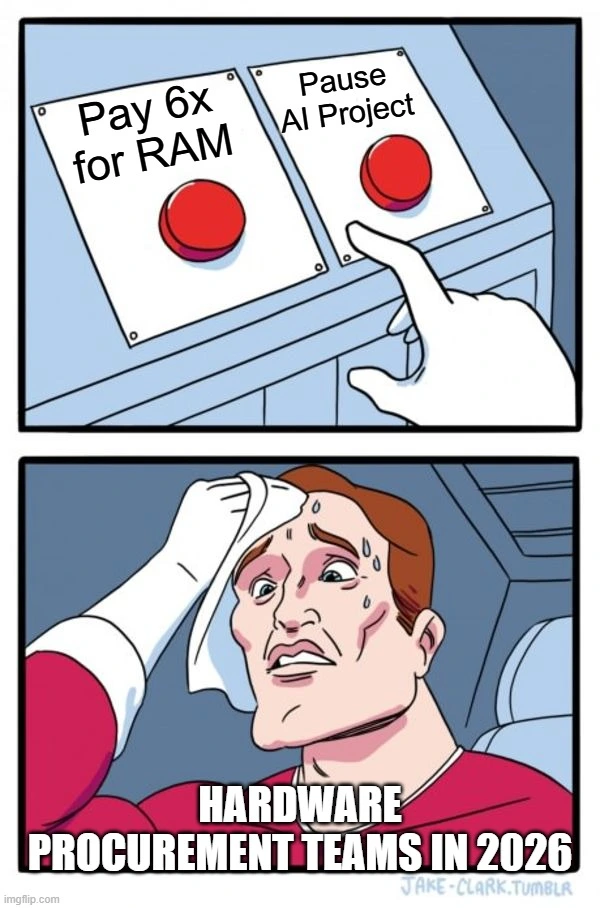
Simultaneously, the AI boom has led to a staggering 5x to 6x increase in RAM and storage prices over the past six months, forcing companies to pause critical projects due to budget overruns. In this environment, relying solely on public cloud giants is no longer just a vendor lock-in risk – it is a strategic vulnerability.
The reality is simple: if your infrastructure depends entirely on external providers operating under foreign jurisdictions, your business continuity is no longer fully in your hands.
Short Recap: What Is a Sovereign Private Cloud?
A private cloud ensures that data, workloads, and IT infrastructure remain:
- Within a specific jurisdiction
- Subject only to local laws and governance
- Fully controlled by the organization or trusted local providers
This goes beyond traditional cloud computing. Sovereignty encompasses:
- Data residency
- Operational control
- Legal jurisdiction
- Security autonomy
The 2026 Context: Geopolitics Meets Cloud Infrastructure
The global digital landscape is increasingly shaped by geopolitical conflict. Cyberattacks are no longer isolated incidents – they are coordinated, strategic, and sometimes state-sponsored.
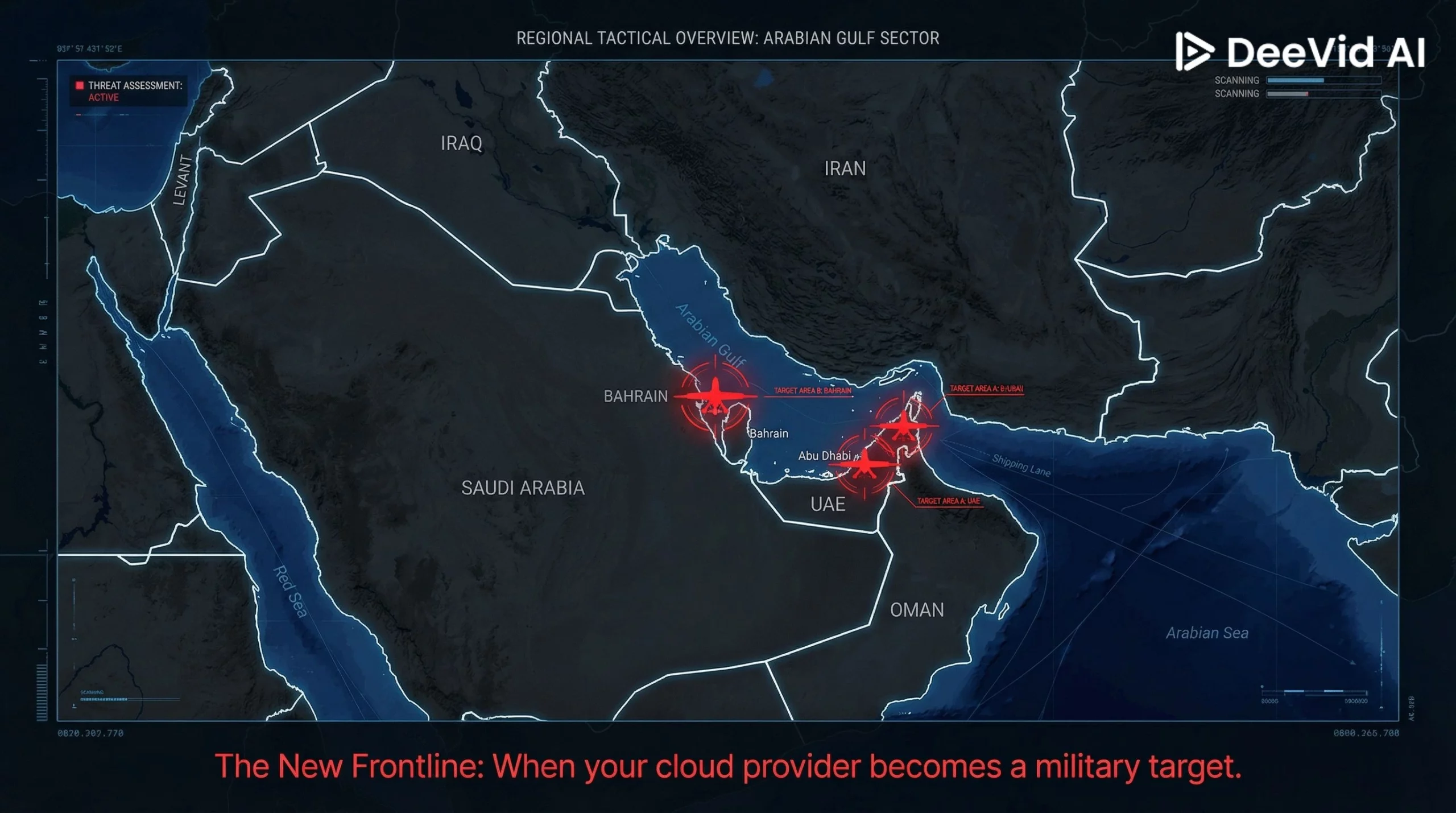
According to recent analyses, the Iranian attack on AWS facilities in the UAE und Bahrain was not a random act of cybercrime; it was a calculated military defense strategy. By targeting the physical infrastructure of a hyperscaler, Iran demonstrated that data sovereignty isn’t just about laws on paper – it is about physical security and jurisdictional control.
Companies are now viewing dependence on foreign hyperscalers as a “strategic variable.” In a crisis, can you guarantee your data won’t be caught in the crossfire? As Gartner notes, geopolitical tensions are the primary driver behind the projected 36% increase in private cloud spending, expected to hit $80 billion in 2026.
The line between civilian and military data is blurring. If a hyperscaler’s data center houses both a hospital’s records and military intelligence, it becomes a target. For companies running workloads in politically volatile regions, this dependency creates an existential risk.
The Hidden Crisis: Hardware Inflation Driven by AI
While geopolitics threatens availability, economics is threatening feasibility. The relentless demand for AI and Large Language Models (LLMs) has fundamentally broken the hardware supply chain.
To speed up training and inference, developers are loading massive models directly into Random Access Memory (RAM). This demand has caused a cascade effect across the entire hardware market:
Memory (DRAM/NAND): Prices have skyrocketed. Manufacturers like Micron have shuttered consumer RAM businesses to focus on high-margin AI chips. Contract prices for conventional DRAM are forecast to rise 55-60% quarter-over-quarter.
CPUs: The shortage is no longer limited to GPUs. AI data centers are consuming massive quantities of CPUs to manage the data flow, leading to supply chain disruptions for Intel and AMD. Server lead times have stretched from a few weeks to several months.

The Ripple Effect: Budgets, Delays, and Cloud Price Pressure
This isn’t theoretical; this economic instability is already affecting businesses:
- Infrastructure projects are being delayed or paused due to hardware, or cloud bills budget overruns.
- Companies are struggling to procure GPUs and high-memory systems.
- Cloud providers are passing costs downstream, leading to rising service prices.
- Increasing energy prices further compound operational expenses.
- As AI workloads grow, hyperscalers are investing heavily in infrastructure and those costs inevitably propagate to customers.
This makes the predictable, fixed-cost model of owning your own infrastructure more attractive and safe in the long term.

The hardware price explosion isn’t happening in a vacuum — it’s driven by relentless demand for AI servers, and nowhere is this clearer than in AMD’s latest earnings. As the visual above shows, AMD’s Data Center segment surged 39% year-over-year to $5.4 billion in Q4 FY25, fueled by adoption of MI300 AI accelerators and EPYC processors. Overall company revenue grew 34% to $10.3 billion, with operating margins expanding to 17%.
What does this have to do with your private cloud strategy? Everything.
When AMD reports that it shipped $390 million in legacy MI308 AI chips to China in a single quarter (navigating complex export controls to do so) it underscores two critical realities:
- AI hardware demand is insatiable, diverting manufacturing capacity away from conventional server components.
- Supply chains remain geopolitically fractured, with companies scrambling to secure chips across regulatory boundaries.
The $2.3 billion in R&D spending (23% of revenue) in the visual shows that AMD is betting big on AI acceleration, and this trend is mirrored across Intel, NVIDIA, and every chipmaker. The result? Production lines prioritize high-margin AI silicon over traditional DRAM, server CPUs, and storage controllers. This supply-side imbalance is precisely why RAM prices have 5x’d and storage costs continue climbing.
What this means for organizations building or expanding private cloud infrastructure in 2026
- Your cloud bill is likely to increase
- Cost volatility is now structural, not cyclical
- Hardware refresh cycles are becoming more expensive
- Budget predictability is decreasing
- Vendor dependency becomes even riskier
- Lead times for standard server components are unpredictable
- Public cloud providers will pass these increases to customers — we’re already seeing hyperscalers announce price adjustments tied to “infrastructure optimization.”
- Cloud Kostenoptimierung becomes more critical than ever
Private Cloud as a Cost-Control Strategy
In an era where “everything as a service” is becoming less reliable and more expensive, the pendulum is swinging back toward ownership – specifically, open-source ownership.
Traditionally, the private cloud has been framed as a security and compliance solution. In 2026, it is also a financial and operational strategy.
“As geopolitical tensions rise, organizations outside the U.S. and China are investing more in sovereign cloud IaaS to gain digital and technological independence.” — Rene Buest, Gartner.
This is precisely why Cloudification developed c12n Private Cloud. We believe that sovereignty cannot be bought from the same dominant US hyperscalers that create the dependency.
By building sovereign infrastructure:
You can optimize hardware procurement strategies
Extend hardware lifecycle with tailored workloads
Reduce exposure to sudden cloud price increases
Our approach combines OpenStack und Kubernetes into a fully automated, open-source private cloud solution. Here is how we address the challenges:
Geopolitical Immunity: With c12n, you can run a fully air-gapped environment. Whether geopolitical tensions rise or a data center in a neighboring country is attacked, your operations remain isolated and secure in the data center of your choice.
Hardware Cost Mitigation: We don’t lock you into specific vendors. You can use any hardware (Intel, AMD, etc.) and even mix hardware vendors. If you decide to operate your cloud by yourself or with the help of another OpenStack vendor you can do it at any time. Our support contracts are flexible and fair and there are zero license fees.
VMware Exit Strategy: With Broadcom’s acquisition causing license costs to skyrocket, the TCO of proprietary software is out of control. c12n offers a 45% lower TCO by eliminating licensing nonsense and relying on proven open-source technologies that power millions of cores globally.
Private Cloud Is About Control, Technically and Economically. In a world where infrastructure is a geopolitical asset, hardware is becoming scarce and expensive and cloud prices are rising, organizations must rethink their strategy.
Owning and controlling your infrastructure is no longer a luxury – it’s becoming a necessity. If you need more reasons to consider choosing a private cloud, check out this article.
Public Cloud vs. Sovereign Private Cloud in 2026
To visualize the risks, consider how a sovereign private cloud stacks up against the public cloud in the current climate:
| Feature | Public Cloud (Hyperscalers) | Sovereign Private Cloud (e.g., c12n) |
|---|---|---|
|
Geopolitical Risk |
High. Assets are often concentrated in geopolitical hotspots. Data may be subject to foreign jurisdiction (e.g., US CLOUD Act) regardless of data center location. |
Lower. Physical and logical control remains within your jurisdiction. No risk of data “grabbing” due to foreign conflicts. |
|
Hardware Cost Trends |
Variable. Public clouds raise prices to cover their hardware shortages and energy costs. |
Predictable. Capital expenditure (CapEx) on hardware is locked in. Operational expenditure (OpEx) is predictable due to transparent support costs. |
|
Security |
Shared responsibility model; physical security is handled by the provider but may be insufficient against state-level military attacks. |
Air-gapped options available. Full control over physical security and network perimeters. |
|
Compliance (Data Sovereignty) |
Complex. Requires negotiating specific “sovereign regions” which come at a premium. |
Native. Data never leaves the premises. Compliance with local data protection laws. Optional certifications can be done. |
|
Supply Chain |
Dependent on the hyperscaler’s global procurement. |
You control the procurement cycle, allowing you to time hardware purchases to mitigate price spikes. |
|
Vendor Lock-in |
Medium or High depending of used public cloud services |
None |
Closing Thoughts
The world of 2026 is unpredictable. With escalating geopolitical tensions, cyberattacks, and increasing reliance on hyperscalers, organizations and governments must rethink where and how their data is stored, processed, and protected. Attacks on digital infrastructure are no longer theoretical, and hardware costs are making cloud sprawl unaffordable.
It is time to invest in infrastructure that respects your sovereignty, your budget, and your security requirements.
Ready to build your private cloud fortress?
Contact us today and discover how Cloudification’s c12n Private Cloud can help you escape vendor lock-in, stabilize your hardware costs, and secure your data against the geopolitical storms of 2026.


