OpenStack
Beratungsdienstleistungen
OpenStack Expertenberatung und Architektur-Services für Unternehmen, die private oder öffentliche Clouds aufbauen oder skalieren.
Von der ersten Idee bis zur Produktion, wir helfen Organisationen bei der Konzeption und dem Betrieb zuverlässiger und skalierbarer OpenStack-Umgebungen.
Cloudification ist langjähriger OpenStack-Contributor
-
OpenInfra Silver Member seit 2023
-
150+ gemergte OpenStack-Änderungen
-
Koautor von 2 OpenInfra Whitepapers
-
Core Reviewer, ATC, PTG-Teilnehmer
-
Unsere c12n.cloud basiert auf OpenStack


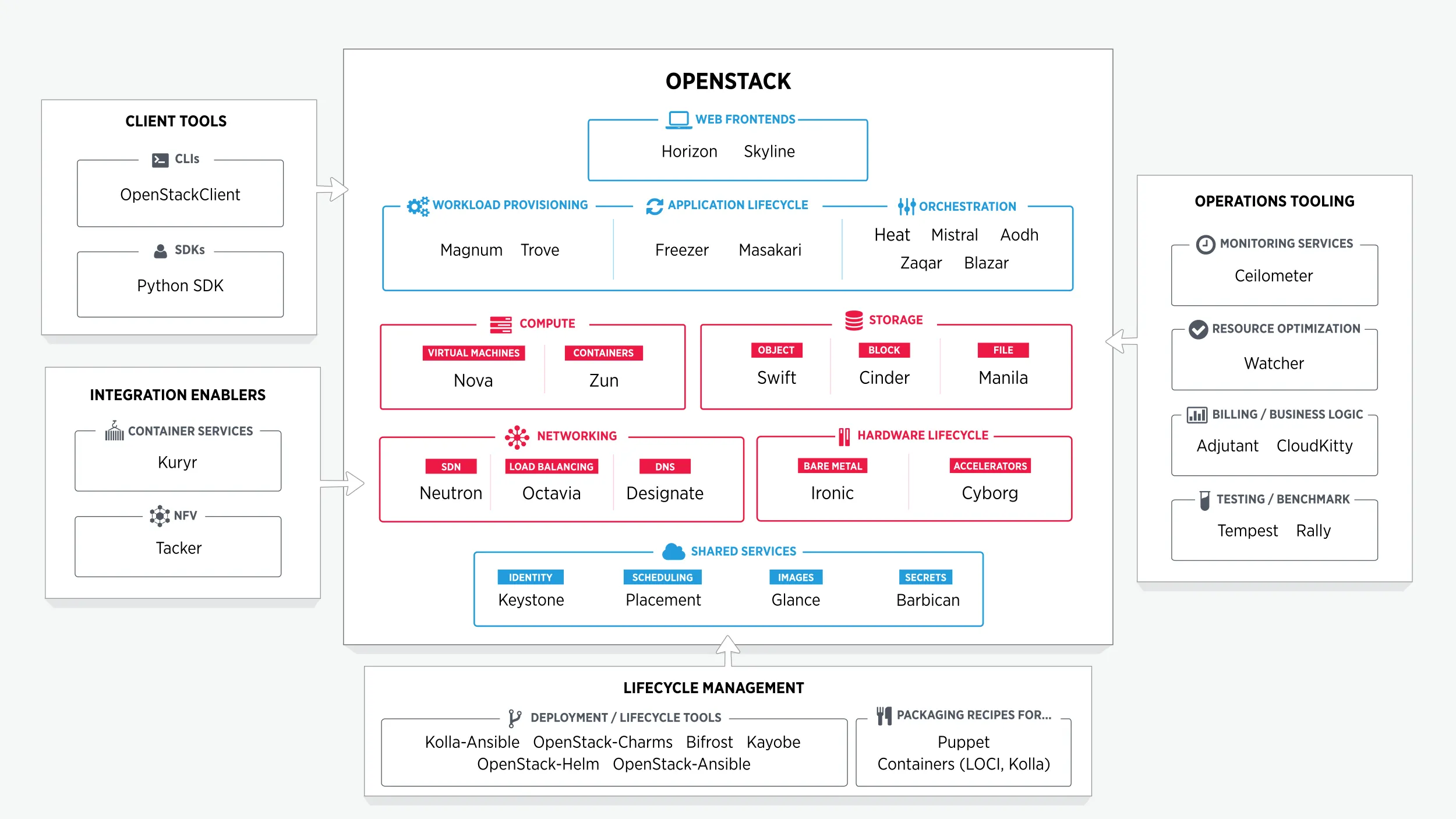
OpenStack-Projekte auf einen Blick:
Professionelle OpenStack-Services von Cloudification:
OpenStack ist komplex, und die initiale Architektur sollte nicht unterschätzt werden, da Designentscheidungen in der Produktion nur schwer zu revidieren sind. Unsere OpenStack-Architekturberatung umfasst Themen wie:
- Multi-Region-Architektur
- Availability Zones und Nova Cells
- Hochverfügbare Deployments
- Konvergente vs. hyperkonvergente Deployment
- Stretched vs. einzelnes Keystone pro Region
- Empfohlene und aktiv gepflegte OpenStack-Komponenten
- OpenStack Regions vs Availability Zones vs Nova Cells
- Multi-Tenancy in OpenStack: Keystone-Domains, Projekte und Unterprojekte
- Skalierung und Best Practices für OpenStack in der Produktion
- Sicherheit, RBAC, Richtlinien und Audit
Netzwerk ist vielleicht der schwierigste Teil jeder Cloud-Plattform und OpenStack bildet da keine Ausnahme. Das Cloudification-Team hilft Ihnen gerne bei:
- Neutron-Design, das skaliert
- Neutron ML2/OVS vs OVN
- Neutron-Erweiterungen und RBAC
- Neutron-QoS und Traffic-Shaping
- Neutron BGP dynamic routing
- Octavia HA LBaaS setup
- Troubleshooting bei Windows-Gast-VM-Netzwerkleistung
- Korrekte MTU-Einstellungen
- Native OpenStack-VLAN-Verwaltung
- VXLAN- vs. Geneve-Tunneling
- NIC Offloading and Multiqueueing
Bei über 30 unterstützten Speichertreibern in OpenStack kann man leicht den Überblick verlieren. Etwa 50 % aller OpenStack-Installationen nutzen Ceph, aber die Ceph-Leistung passt möglicherweise nicht zu allen Workloads. Cloudification hilft Ihnen bei der Auswahl der besten Lösung:
- Ceph-Deployment mit Rook
- Ceph-RGW-Skalierbarkeit und S3-API
- Ceph-Replikation vs. Erasure Coding
- Ceph Vollständiger OSD-Verschlüsselung
- Hardware-Spezifikationen für Ceph-Speicher
- Metro-Replikations-Setups
- Backup-Tools von Drittanbietern: Storware, Trilio, Coriolis
- NetApp-, Pure-, Dell-Speicherintegration
- Cinder Backups vs Snapshots
- Cinder QoS
OpenStack-Upgrades haben den Ruf, schwierig zu sein, aber mit dem SLURP-Prozess gibt es nur ein Upgrade pro Jahr. Bei Cloudification verwalten wir über 20 OpenStack-Clouds und haben einen etablierten Prozess mit GitOps-Automatisierung, um Upgrades reibungslos und schnell zu gestalten. Weitere Themen, die wir begleiten:
- Rechenzentrums-Kapazitätsplanung
- Hardware-Lebenszyklus, Tests und Monitoring
- Hardware-Tiering und Rechenzentrumsbetrieb
- Change-Management für Cloud-Anbieter
- Metering und Billing in OpenStack
- Over-provisioning in OpenStack
- Individuelle Patches für OpenStack
- Beratung zu OpenStack-Release-Upgrades
- Upstream-Entwicklung für OpenStack
Die Migration von VMware, Nutanix, Proxmox oder öffentlichen Clouds zu einer privaten OpenStack-Cloud ist eine strategische Entscheidung, die sorgfältige Planung und Umsetzung erfordert. Sprechen Sie mit unseren OpenStack-Experten über fortgeschrittene Themen wie:
- Feature-Parität zwischen VMware und OpenStack
- Arbeitslastanalyse in der Cloud
- Cloud-native Architekturen
- Kubernetes-as-a-Service für OpenStack
- Werkzeuge für Migration und Disaster Recovery
- os-migrate/virt v2v/migratekit/coriolis
- Leistungs-Benchmarks
- QoS-Konfiguration
- SLO, SLA und Error Budgets
- Absicherung von Workloads in der Cloud
OpenStack-Komponenten, mit denen wir arbeiten








Häufig gestellte Fragen (FAQ)
Welche Hardware kann für OpenStack verwendet werden?
Grundsätzlich kann jede moderne x86-Server-Hardware verwendet werden – unabhängig vom Hersteller.
Verschiedene Hardware-Generationen, CPUs und Hersteller können in einem Cluster gemischt werden, was jedoch einen zusätzlichen operativen Aufwand bedeutet.
Wir empfehlen für Produktionsumgebungen mindestens 6 Server, insbesondere bei Verwendung von Ceph für Speicher.
Dedizierte Speicherknoten und ein dediziertes Netzwerk sind für öffentliche Clouds Pflicht und für größere private Clouds (30+ Knoten) empfehlenswert.
Weitere Informationen zur Hardware-Auswahl für OpenStack-Clouds finden Sie in unserem Blogbeitrag hier.
Bietet OpenStack einen eigenen Hypervisor?
Nein, die meisten OpenStack-Deployments basieren auf KVM (Kernel-based Virtual Machine), was ein Linux-Basisbetriebssystem voraussetzt.
OpenStack unterstützt auch andere Hypervisoren wie XEN, aber KVM ist die am häufigsten genutzte und beste Option.
Eine vollständige Liste der Funktionen und unterstützten Hypervisoren finden Sie in der Hypervisor Support Matrix und OpenStack Nova-Dokumentation.
Wie oft sollte OpenStack aktualisiert werden?
Es gibt zwei Releases pro Jahr, und jede zweite Version ist ein sogenanntes SLURP.
SLURP steht für Skip Level Upgrade Release Process – ein OpenStack-Release-Modell, das ein Upgrade jährlich statt alle sechs Monate erlaubt.
Wir empfehlen ein Upgrade mindestens einmal pro Jahr – oder zweimal pro Jahr, wenn Sie die neuesten Funktionen erhalten möchten.
Welches Basisbetriebssystem wird für OpenStack empfohlen?
Die Anforderungen an die Base-OS-Distribution sind relativ locker, besonders wenn OpenStack in Containern bereitgestellt wird. Es sollte Linux mit einer modernen Kernel-Version sein, die KVM, Libvirt und OVS/OVN unterstützt.
Laut aktuellen OpenStack-Benutzerumfragen basieren etwa 50 % aller OpenStack-Installationen auf Ubuntu Server LTS. Das wäre auch unsere Standardwahl für c12n.cloud -Deployments.
Falls Sie eine andere Distribution als Ubuntu oder Rocky verwenden möchten, empfehlen wir dringend, die Unterstützung Ihrer Deployment-Tools und etwaiger zusätzlicher Treiber (z. B. für GPUs) zu prüfen.
Wie viele OpenStack-Dienste (Komponenten) gibt es?
Mit dem Release 2026.1 gibt es 35 offizielle, unterstützte OpenStack-Dienste.
Einige Dienste sind leider nicht in gutem Zustand oder erhalten wenige Updates und werden daher nicht für die Produktion empfohlen.
Etwa 20 OpenStack-Dienste können für Produktionsumgebungen empfohlen werden – der Rest erfordert sorgfältige Tests und Evaluierung.
Alle Core-Dienste wie Keystone, Nova, Neutron, Cinder, Glance und Placement sind gut unterstützt und werden aktiv mit Hunderten von Beiträgen zwischen den Release-Zyklen weiterentwickelt.
Wo wird der Quellcode von OpenStack gehostet?
Die offizielle Heimat des OpenStack-Quellcodes ist opendev.org, und die Repositories finden Sie unter https://opendev.org/openstack/
Dieselben Repositories werden auf GitHub automatisch gespiegelt unter http://github.com/openstack/
Was ist der offizielle Bug-Tracker von OpenStack?
Die meisten OpenStack-Projekte nutzen Launchpad für Bug- und Spec-Tracking.
Gibt es eine Billing-Komponente für OpenStack?
Ja! ✅
OpenStack verfügt über Standardkomponenten für Metering und Billing der Cloud-Nutzung.
Es gibt auch kommerzielle Tools, die oft mit einem alternativen Dashboard und Zahlungsanbieter-Integrationen kombiniert werden.
Lesen Sie unseren Blogbeitrag für einen detaillierten Überblick über die Optionen.
Trägt Cloudification zu OpenStack upstream bei?
Ja! ✅
In den letzten Jahren haben wir erfolgreich über 150 Änderungen zu OpenStack Nova, Cinder, Manila, Neutron, Designate, Ironic, Octavia und Barbican beigetragen.
Unser Team umfasst Active Technical Contributors (OpenStack ATC), Core Reviewer und Summit Technical Committee Volunteers.
Was ist das OpenStack PTG (Project Teams Gathering)?
PTG steht für Project Teams Gathering – kollaborative Veranstaltungen der OpenInfra Foundation. Diese Online-Events bringen Entwickler, Betreiber und Community-Mitglieder zusammen, um kommende Releases zu planen, Fehler zu beheben und die Projektentwicklung aus technischer Sicht zu diskutieren.
Ist OpenStack noch beliebt?
Ja! ✅
Laut OpenInfra-Nutzerumfrage werden weltweit über 55.000.000+ Kerne mit OpenStack betrieben. Es gab Beiträge von über 10.000 Entwicklern und Hunderten von Unternehmen. Viele Fortune-500-Unternehmen betreiben Clouds auf Basis von OpenStack.
Im Neutron- und OVN-Dschungel verloren?
Lesen Sie unseren Blog und besuchen Sie unsere OpenStack-Workshops:

OpenStack Evaluieren?