


OpenStack Platforms Compared: A Comparative Look at c12n.cloud, Mirantis, Sardina FishOS, and Virtuozzo

Finding Your Path from VMware to Sovereign Cloud

In our latest article β€” β€œOpenStack-Based Cloud Platforms: Why Vanilla Matters – c12n, Canonical, and Red Hat (RHOSP) Compared” β€” we explored why organisations are increasingly choosing upstream, vendor-neutral OpenStack implementations over heavily customised distributions.Β 

If you haven’t read it yet, we encourage you to check it out first β€” it provides valuable context for understanding why β€œvanilla OpenStack” matters and sets the stage for this deeper comparison.

This article builds on that foundation and turns to a pressing question many IT leaders are asking in the post-Broadcom era:

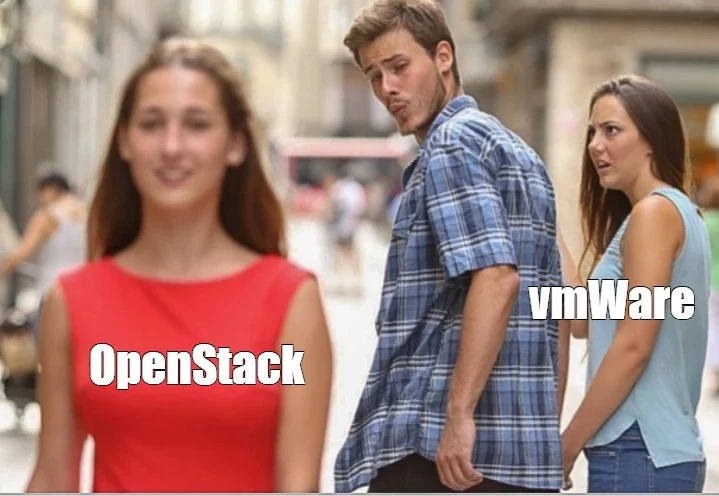
If not VMware β€” then which OpenStack-based platform is the right fit?

The post-Broadcom landscape has made one thing clear: vendor lock-in is a strategic risk. As enterprises and service providers actively seek alternatives to VMware, open-source platforms built on OpenStack have emerged as the primary destination. However, not all OpenStack solutions are the same. They differ fundamentally in their architecture, commercial models, and operational philosophy.

In this article, we will break down four leading OpenStack-based alternatives: Cloudification’s c12n.Cloud, Mirantis OpenStack, Sardina Systems FishOS, and Virtuozzo Hybrid Infrastructure. We’ll describe each technology, Β dissect their approaches, compare their features and pricing models, and help you understand which solution is the right fit for your specific needs.

Comparing the Platforms: Four Paths to an OpenStack Cloud

All four platforms use OpenStack to deliver IaaS (Infrastructure-as-a-Service) capabilities, but they build upon this foundation in distinct ways.

c12_logo

1. c12n.cloud (by Cloudification)

c12n.cloud is a fully automated, production-ready private cloud platform built on upstream open-source components (OpenStack, Kubernetes, Ceph). It is built upon a β€œvanilla” OpenStack + Kubernetes solution delivered with GitOps deployment automation and full ownership of deployment artifacts (no black-box, no vendor locks). Its core philosophy is to deliver enterprise-grade cloud capabilities without license fees, ensuring the customer retains complete ownership and control of the platform code.

⭐ Key Differentiator: 

    • Zero license fees and full ownership. The platform when deployed by Cloudification is a client-owned asset with all configuration, ensuring complete vendor independence.
    • Vanilla OpenStack guarantees compatibility, avoids proprietary forks, and ensures you benefit directly from upstream community innovation.
    • Optional 24/7 premium support allows you to pay only for the expert help you need.

⚠️ Considerations:

    • c12n is a younger player compared to this game, though its technology and commercial model are rigorously engineered.
  • Β 
mirantis-logo

2. Mirantis OpenStack

Mirantis is a long-standing player in the OpenStack ecosystem. They provide a distribution of OpenStack, often coupled with their own management and lifecycle tooling. Mirantis offers both a pure software model and managed services. Their focus is on providing a stable, enterprise-grade OpenStack distribution for large-scale deployments. They provide a range of migration bundles, from fully managed IaaS to self-managed enterprise solutions with containerization services.

⭐Key Differentiator: 

    • Enterprise-grade support and professional services from a long-standing OpenStack contributor, with structured migration pathways.

⚠️ Considerations:

    • Vendor Lock-in Risk: You are licensing Mirantis’s proprietary distribution, leading to ongoing subscription fees and dependency on their product roadmap.
fishos_logo

3.Β  Sardina Systems

Sardina Systems provides “FishOS,” an integrated software platform that automates the deployment, scaling, and lifecycle management of OpenStack and Kubernetes clusters. It is a fully automated cloud management platform that integrates OpenStack, Kubernetes, and Ceph.Β  It has a strong focus on orchestration and automation to reduce operational overhead.

⭐ Key Differentiator: 

    • Advanced automation for operations and migration, promising up to 80% server utilization and zero-downtime upgrades.

⚠️ Considerations:

    • High Licensing Costs: The advanced automation features are part of Sardina’s proprietary FishOS product, requiring a subscription and creating a hard dependency on their unique toolset.
virtuozzo_logo

4. Virtuozzo

Virtuozzoβ€˜s core technology is a hyperconverged infrastructure (HCI) platform that combines its own hypervisor (based on KVM) with software-defined storage. While it offers OpenStack as an orchestration layer, its heritage is in high-density virtualization and container hosting, often appealing to service providers and SaaS companies.

⭐Key Differentiator: 

    • High-performance, hyperconverged infrastructure (HCI) with a focus on performance and ease of management for service providers.

⚠️ Considerations:

    • The value is in Virtuozzo’s proprietary HCI stack, not just OpenStack. This creates a dependency on their entire technology suite and comes with a subscription fee.
OpenStack_VmWare_meme

Side-by-Side Comparison

Feature c12_iconc12n
(Cloudification)
mirantis-logoMirantis OpenStack fishos_logoSardina Systems FishOS virtuozzo_logoVirtuozzo Hybrid Infrastructure

Core stack

OpenStack (vanilla) + Kubernetes + Ceph, GitOps automation, Gardener KaaS, end-to-end observability and logging. Optional third-party integrations for billing and dashboards.

Mirantis Cloud Platform / OpenStack offerings (OpenStack on Kubernetes)

Modified distribution tied to the RHEL ecosystem.

KVM virtualization, OpenStack orchestration options, multi-tenant control plane, billing portal

Licensing / Pricing model

Zero license fees; commercial fees for professional services, managed services and support. Contact for a quotation

Commercial subscription / support model; software + enterprise support.

(e.g., OpsCare Plus ~$61k/yr for 18 nodes)

Marketed as β€œpay-as-you-grow” / commercial services;

Commercial licenses; offers pay-per-use models and β€œget a quote” pricing. Various resellers list per-unit storage/license pricing, but vendor encourages quotes for production

Code Ownership

Client retains full ownership. No vendor lock.

Licensed use of Mirantis IP

Licensed use of Sardina IP

Licensed use of Virtuozzo IP

Automation / Upgrades

GitOps-first automation; focus on deterministic deployments, mirroring container images and retaining deployment artifacts

Automated Day 2 ops via Kubernetes underlay. Emphasizes lifecycle management and enterprise updates for Kubernetes & OpenStack

AI-powered workload management & “Move It” migration. Promotes automated operations, zero-downtime upgrades and energy optimisation

Automation for provisioning and tenant management; emphasis on fast time-to-service for MSPs.

Support Model

Optional 24/7 Premium Support backed by SLA

Mandatory with subscription (24/7 in Enterprise Bundle)

9×5 or 24/7 depending on package (FishOS Standard/Advanced)

24×7 support included in the package

Open-source purity / vendor lock-in

High (vanilla upstream approach, GitOps artifacts owned by client). Low vendor lock-in by design

Medium β€” uses and contributes to upstream but packaged as enterprise distribution; vendor services can create dependency.

Medium β€” FishOS builds on upstream but provides a custom ops layer; ask about code/data ownership.

Lower (commercial platform with proprietary management components); built for MSPs β€” expect some vendor-specific tooling.

HPC / GPU / AI suitability

Explicit HPC & GPU support (NVMe, vGPU, Nvidia MIG, TSN, RDMA) in c12n HPC offerings. Good for on-prem AI/HPC/VLLMs

Mirantis supports modern AI/ML workflows (Kubernetes and GPU enablement); good for hybrid AI infra.

Sardina is focused on stable operations for OpenStack; GPU/HPC suitability depends on their integration services β€” typically doable but check specifics with vendor

Virtuozzo can be used for performance-sensitive workloads, but MSP positioning makes it most common for tenant VMs/containers rather than raw HPC. Check product lines and optional integrations for GPU

Suitable For

Cost-control, Real Sovereignty, No Lock-in for SMEs, Startups and Enterprises

Large enterprises seeking vendor-backed OpenStack

Organizations prioritizing operational automation

Service Providers and MSPs

Use Cases & Guidance β€” When To Choose Which

Choose c12n if:

  • Long term TCO is the Primary Driver: You want to eliminate software license fees permanently and invest your budget in hardware and expert support.
  • Vendor Lock-in is Unacceptable: You require the legal and technical guarantee that you own and control your cloud platform in the long term.
  • You Value a GitOps-Native Approach: You prefer simple upgrades and Day-2 operations with a high degree of automation.

Choose Mirantis OpenStack if:

  • You Want a Fully-Managed Service: The “Starter Bundle” offering a fully managed IaaS is appealing for teams that want to offload operations completely.
  • You Need Enterprise Hand-Holding: You are an enterprise that values the deep professional services, training, and 24/7 support and don’t care about the vendor lock-in.
  • You are Planning a Large-Scale VMware Migration: Their structured bundles and migration tooling provide a clear, vendor-supported path.

Choose Sardina Systems FishOS if:

  • Operational Automation is Your Top Priority: You want to minimize manual intervention with AI-powered workload balancing, rebalancing, and power management.
  • You Have a Complex VMware Migration: The “FishOS Move It” appliance is designed specifically to automate and de-risk the migration of VMs from VMware.
  • You Need a Built-in Billing: For service providers, the integrated “FishOS Billing” engine with Stripe/Ayden integration makes it easier to start charging the customers.

Choose Virtuozzo Hybrid Infrastructure if:

  • You Prefer a Tightly Integrated HCI Stack: You want a simple, hyperconverged deployment without the need to integrate components separately. You don’t mind vendor lock.
  • You are a Cloud or Managed Service Provider: The platform is purpose-built with multi-tenancy, self-service portals, and white-labeling capabilities.

Β 

Our Take at Cloudification

The shift from VMware is more than a cost-saving exercise; it’s a strategic move toward infrastructure sovereignty. While Mirantis, Sardina, and Virtuozzo offer powerful, subscription-based OpenStack solutions, they ultimately maintain a vendor-customer relationship. You are paying for a license to use their integrated product.

c12n.cloud represents a paradigm shift. We believe the value is not in the license, but in the integration, automation, and support. Our model is built on true partnership and transparency:

  • Zero License Fees: Your capital is invested in an asset, not a recurring expense.
  • Full Code Ownership: The platform is yours forever. You are immune to future vendor pricing or policy changes.
  • Optional, Expert Support: Access 24/7 senior engineer support with upstream fixes when you need it, without it being a mandatory cost or long term commitments.

You aren’t just switching vendors; you are reclaiming ownership of your infrastructure foundation.

Ready to Own Your Cloud?

Stop evaluating temporary alternatives and start building a permanent, sovereign asset. Contact our team for a detailed technical deep-dive or to discuss a proof-of-concept that demonstrates the power and freedom of the c12n.cloud platform.

openstack_anything-is-possible-meme
Blog > Cloud > OpenStack Platforms Compared: A Comparative Look at c12n.cloud, Mirantis, Sardina FishOS, and Virtuozzo
Let's Get Social: