


AI and Open Source in 2026: Opportunities, Security Risks, and the Future of Open Infrastructure
AI and Open Source are influencing one another at an unprecedented pace, fundamentally changing how software is developed, maintained, secured, and deployed. From AI-assisted coding to autonomous vulnerability detection and self-hosted Large Language Models (LLMs), open source communities are entering a new era where productivity is increasing—but so are governance and security challenges.
Just a few years ago, AI was mostly viewed as another application running on open infrastructure. Today, AI is actively participating in the development of that infrastructure itself. Developers are using AI copilots to write code, maintainers are leveraging machine learning to triage issues, and enterprises are deploying open-source AI models inside private cloud environments to maintain data sovereignty.
The relationship is no longer one-sided. AI is transforming open source, and open source is shaping the future of AI.
Why AI and Open Source Matter More Than Ever
The rapid success of generative AI would not have been possible without open-source technologies.
Projects such as Linux, Python, Kubernetes, OpenStack, PyTorch, TensorFlow, Hugging Face Transformers, vLLM and countless open-source libraries have provided the foundation upon which today’s AI ecosystem is built.
At the same time, the AI revolution is giving back to open source by:
- accelerating software development
- lowering the barrier to contribution
- automating repetitive maintenance
- improving documentation
- strengthening testing and debugging
- enabling smarter infrastructure operations
This creates a positive feedback loop where both ecosystems continue to grow together.
AI Is Making Open Source Development Faster
Perhaps the most visible change is the rise of AI coding assistants. Tools such as GitHub Copilot, Claude Code, Codex, Continue, Cursor, and open-source coding agents have become standard development companions. Instead of replacing developers, they function more like modern code compilers.
Linus Torvalds recently compared AI coding assistants to compilers: nobody says a compiler wrote their software, even though it dramatically increases productivity. AI is becoming another productivity layer rather than a replacement for engineering expertise as some predicted.
Developers now spend less time writing boilerplate code and more time solving complex architectural problems.
Common AI-assisted tasks include:
- Writing unit tests
- Explaining unfamiliar code
- Translating between programming languages
- Generating documentation
- Reviewing pull requests
The result is significantly faster development cycles.
AI Is Helping Open Source Maintainers
Maintaining an open-source project has always been difficult. Popular repositories receive hundreds of bug reports, pull requests, feature requests, and documentation updates every month.
AI is beginning to reduce this workload on project maintainers and reviewers. Modern AI tools can:
- Classify issues and identify duplicate bug reports
- Suggest reviewers
- Summarize pull requests
- Detect regression risks
- Generate release notes
This allows maintainers to focus on architectural decisions instead of repetitive administration. However, there is a downside.
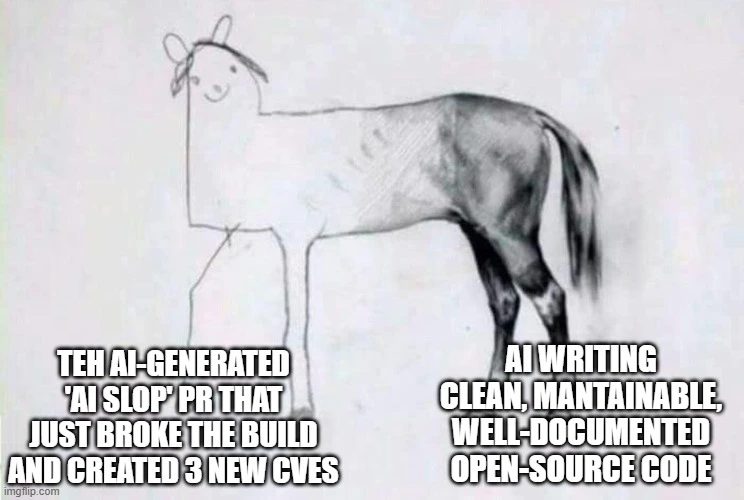
Many maintainers report receiving AI-generated bug reports that contain little useful information. These “drive-by” submissions often require human investigation before they can be validated, increasing rather than decreasing maintainer workload.
Like any tool, AI improves productivity only when used responsibly.
Open Source Communities Are Adapting to AI
One of the biggest misconceptions about AI in open source is that communities are either embracing it without limits or rejecting it entirely. In reality, many of the world’s largest open-source foundations are taking a more balanced approach.
The OpenInfra Foundation, home to projects such as OpenStack, Kata Containers, StarlingX, and Zuul, has published an AI Policy that encourages the responsible use of AI while reinforcing one fundamental principle: contributors remain accountable for everything they submit.
This may sound obvious, but it addresses an increasingly important question: if an AI assistant writes a pull request, who is responsible if that code introduces a vulnerability?
According to the OpenInfra Foundation, the answer is simple – the human contributor. The AI policy emphasizes several key principles:
- AI should assist contributors, not replace them.
- Developers remain responsible for reviewing and validating AI-generated code.
- AI-generated contributions should meet the same quality standards as any human-written contribution.
- Transparency around significant AI assistance helps maintain trust within the community.
- Human maintainers always make the final decisions regarding code acceptance.
These guidelines preserve the values that have made open source successful for decades: transparency, accountability, and community governance.
Rather than slowing innovation, they ensure that AI strengthens the ecosystem without compromising its integrity.
Security: AI Is Both Defender and Attacker
Security has become one of the hottest discussions surrounding AI and Open Source. Artificial intelligence is rapidly becoming one of the most powerful cybersecurity tools ever created.
It can analyze millions of lines of code in minutes or seconds, detect vulnerabilities that might otherwise go unnoticed, and automate software supply chain monitoring. Open-source projects increasingly rely on AI to improve dependency scanning, identify vulnerable packages, and assist with code reviews. Unfortunately, attackers now have access to exactly the same technology.
Security researchers warn that AI dramatically lowers the barrier for creating sophisticated attacks. Instead of manually researching vulnerabilities, attackers can ask AI models to identify weak dependencies, generate convincing phishing campaigns, or automate exploit development.
The greatest concern is not necessarily that AI invents entirely new attacks – it accelerates existing ones to a scale that was previously impossible.
We can observe this shift by looking at the overall vulnerability landscape. The global number of published CVEs has grown from approximately 20,000 in 2021 to over 48,000 in 2025, with 2026 already on track to exceed previous records. While this increase cannot be attributed solely to AI, automated analysis and AI-assisted security research are widely considered major contributors to the accelerating pace of vulnerability discovery.
AI Is Finding Bugs Humans Missed for Years
Recent examples demonstrate the power of AI-assisted vulnerability discovery in mature open-source projects.
Recently, researchers using the AI security platform VEGA discovered GhostLock (CVE-2026-43499), a privilege escalation vulnerability that had remained hidden in the Linux kernel for approximately 15 years. The flaw affected nearly every major Linux distribution and allowed local users to obtain root privileges within seconds.
Only months earlier, another AI-assisted security tool identified the Copy Fail (CVE-2026-31431) vulnerability affecting Linux kernels released since 2017. Researchers reported that the vulnerability was discovered after approximately one hour of automated scanning, highlighting how dramatically AI can reduce the effort required to identify deep logic flaws in mature codebases.
This demonstrates that AI systems are capable not only of identifying vulnerabilities but also reproducing exploits automatically. The academic project CVE-GENIE successfully reproduced over 50% of 841 real-world CVEs published during 2024 and 2025 using autonomous LLM agents.
Open Source Projects Are Under Pressure
Projects such as Linux, Kubernetes, and OpenStack already process a continuous stream of vulnerability disclosures, security advisories, and dependency updates. The challenge is increasingly shifting from finding vulnerabilities to validating, prioritizing, and fixing them.
Even the Linux kernel community has begun discussing the impact of AI-generated vulnerability reports. Linus Torvalds recently described Linux security mailing lists as becoming increasingly difficult to manage because multiple researchers often submit duplicate AI-generated findings simultaneously.
This creates a paradox:
- For decades, vulnerability discovery was the bottleneck.
- In the AI era, the bottleneck may become triage and remediation that human have to do.
Organizations operating large open-source environments (e.g., OpenStack private clouds, Kubernetes platforms, Linux-based infrastructure) will increasingly need automated vulnerability management, Software Bills of Materials (SBOMs), signed artifacts, and established patch management simply to keep pace with the volume of discoveries.
The XZ Utils Incident Shows Why Governance Matters
One of the clearest examples is the attempted XZ Utils backdoor, one of the most significant software supply chain attacks ever discovered. The attacker did not simply submit malicious code.
Instead, they spent years building credibility within the community using multiple online identities, gradually earning the trust of maintainers before attempting to introduce the backdoor.
While this attack predated today’s AI boom, security experts warn that generative AI makes this type of social engineering considerably easier. AI can produce convincing emails, realistic documentation, polished pull requests, and even maintain multiple believable virtual online personas at scale.
The lesson is clear: protecting open source is no longer only about reviewing code. Communities must also defend against increasingly sophisticated social engineering.
Maintainers Face an AI-Generated Flood
Open-source maintainers have always struggled with limited time and resources. While AI is helping them automate repetitive work, it is also creating entirely new workloads.
Many popular projects now receive:
- AI-generated bug reports
- Automatically generated pull requests
- Low-quality feature requests
- Duplicated issues and automatically rewritten documentation
Although these submissions are usually well intentioned, they still require human review.
Some maintainers describe this as a form of administrative denial-of-service. Instead of spending time improving software, they must filter increasing amounts of AI-generated content before finding genuinely valuable contributions.
Ironically, the technology designed to improve productivity can reduce it when used irresponsibly.
The Rise of "Vibe Coding"
One of the newest terms gaining popularity in the software industry is vibe coding.
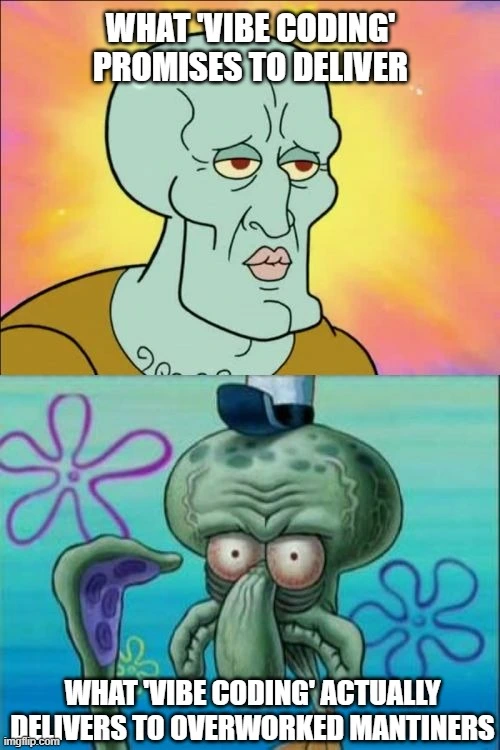
Rather than carefully designing software, developers increasingly rely on AI assistants to generate large amounts of code based on natural language prompts, often accepting the results with minimal review.
While this approach can dramatically increase development speed, it also introduces hidden risks. Developers often deploy code they do not fully understand. Security vulnerabilities, inefficient algorithms, and licensing issues can easily slip into production if AI-generated code is accepted without proper validation.
For open-source communities, this reinforces an important principle:
AI can accelerate development, but it cannot replace engineering judgment.
Experienced maintainers continue to emphasize that understanding the code remains just as important as writing it.
Governance Is Becoming an AI Challenge
Open source has always relied on transparency and human accountability.
AI introduces new questions:
- Who wrote this code?
- Who owns AI-generated contributions?
- How should AI-assisted pull requests be disclosed?
- Which licenses apply to generated code?
- Who is responsible if AI introduces vulnerabilities?
These questions are now important enough that several major open-source organizations are already developing answers.
The OpenInfra Foundation, home to OpenStack and other infrastructure projects, introduced an AI Policy that allows AI-assisted contributions while making it clear that contributors remain fully responsible for everything they submit. AI can assist development, but human maintainers remain accountable for quality and security.
The Linux Foundation is taking a broader approach through initiatives such as LF AI & Data and OPEA (Open Platform for Enterprise AI), promoting open and interoperable AI ecosystems that avoid dependence on proprietary platforms.
Meanwhile, the Cloud Native Computing Foundation (CNCF) is extending software supply chain security practices such as SBOMs, SLSA provenance, and signed artifacts to AI models and datasets running on Kubernetes-based platforms. These practices were originally designed for software delivery but are now becoming equally important for AI models and datasets.
The Open Source Initiative (OSI) is also helping define clearer terminology around AI openness, distinguishing between “Open Weights,” “Open Source,” and “Open Source + Open Data.” This distinction is becoming increasingly important as many models marketed as “open” do not actually provide training code or datasets.
As AI becomes part of the software development lifecycle, governance may become just as important as technology itself.
AI Is Accelerating Digital Sovereignty
One of the strongest enterprise trends is the move toward AI sovereignty. Many organizations want to use AI without sending sensitive, internal company information to third-party LLM models.
Open-source LLMs make this possible. Models such as Llama, Mistral, DeepSeek, and other openly available models can be deployed inside private infrastructure, allowing organizations to:
| Public LLM as a Service | Self-hosted Open Source AI |
|---|---|
|
📤 Data leaves the organization |
🔒 Data remains on-premises |
|
🔗 Vendor lock-in |
💸Requires expensive hardware |
|
💳 Recurring API costs |
📈 Predictable infrastructure costs |
|
⚙️ Limited customization |
💯Full customization |
|
🌍 Internet connectivity required |
📡 Can run completely offline |
This trend aligns closely with the broader movement toward digital sovereignty, particularly across Europe, where organizations increasingly seek control over both their infrastructure and AI workloads.
Why Private Cloud Matters for AI
Running AI workloads requires far more than a pack or latest GPUs. Organizations also need scalable compute, storage, networking, orchestration, monitoring, and strong security. This is where private cloud platforms become increasingly valuable.
At Cloudification, our c12n Private Cloud provides a modern OpenStack and Kubernetes based infrastructure capable of supporting demanding AI workloads while keeping complete control over data, compliance, and operational costs.
Instead of relying entirely on external AI services, enterprises can deploy open-source AI models directly on infrastructure they own and control, combining the flexibility of open source with the security and predictability of private cloud.
As AI adoption grows, infrastructure choices become strategic business decisions rather than simple IT decisions.
Learn more about c12n Private Cloud ☁️
Looking Ahead
Open source has always thrived because of collaboration, transparency, and community. AI does not change those principles; it amplifies them.
The most successful projects over the coming years will be those that embrace AI while maintaining strong governance, best development practices, open collaboration and strict code reviews.
Whether building cloud platforms with OpenStack, orchestrating applications with Kubernetes, or deploying self-hosted AI models with vLLM, organizations increasingly need infrastructure that is open, scalable, and under their own control.
AI is reshaping software development, but open source remains the foundation upon which that future is being built.
Final Thoughts
Artificial Intelligence is transforming open source in profound ways. It enables faster software development, improves documentation, assists with maintenance, and makes advanced technologies more accessible than ever before.
At the same time, AI introduces new governance questions, new software supply chain risks, and entirely new forms of social engineering.
The response from the open-source community has not been to reject AI, but to establish responsible practices that preserve the principles of transparency, collaboration, and accountability. Initiatives like the OpenInfra Foundation’s AI Policy demonstrate that AI can be embraced without compromising the values that have made open source successful.
For enterprises, this evolution has another important implication. As organizations adopt open-source AI models, many are choosing to deploy them on private cloud infrastructure to retain control over sensitive data, meet compliance requirements, and support digital sovereignty.
This is where platforms such as Cloudification’s c12n Private Cloud become highly relevant. A scalable foundation supporting vGPU and Kubernetes as a Service allow to run modern AI workloads while maintaining full control over infrastructure and data.
The future of AI will not be built by proprietary software alone. It will be built on open collaboration, responsible governance, and infrastructure designed to keep innovation open, secure, and sovereign.
Thinking about deploying AI on infrastructure you control?
Cloudification helps organizations build secure, scalable, and sovereign private clouds using OpenStack, Kubernetes, Ceph with end-to-end GitOps automation.
Whether you’re planning AI workloads, modernizing your infrastructure, or migrating away from proprietary virtualization platforms, our c12n Private Cloud provides a future-ready foundation for innovation.


